
Young's Literal Translation (YLT)
A painstakingly literal rendering of the original Hebrew and Greek.
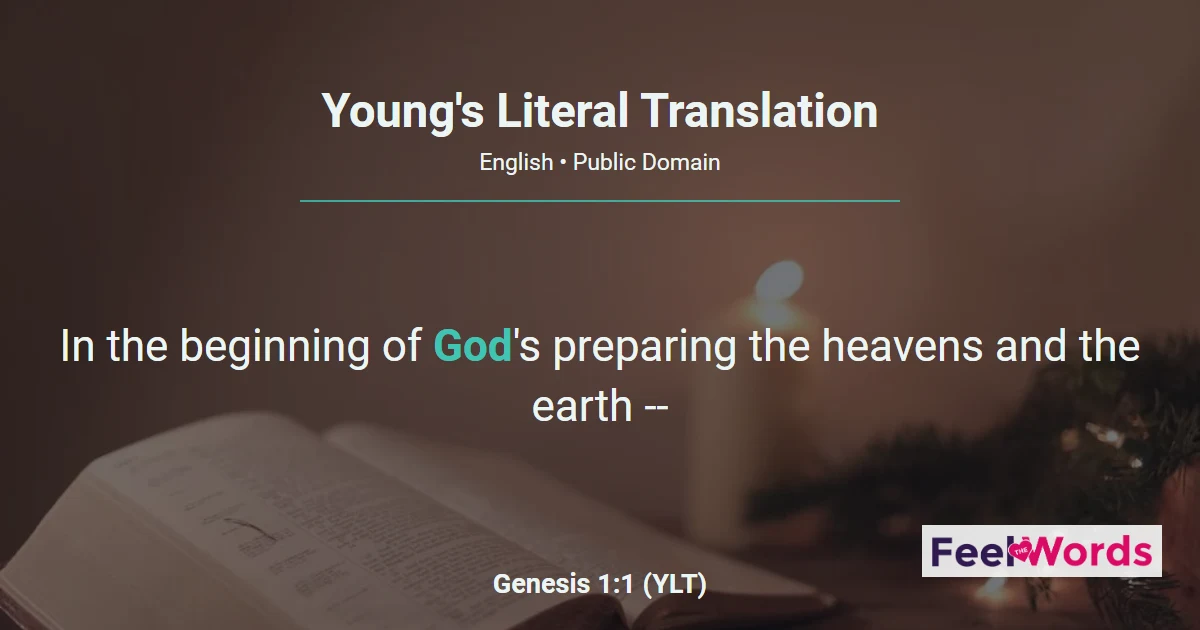
Scottish linguist Robert Young, compiler of Young's Analytical Concordance, published his Literal Translation in 1862 and revised it in 1898 to capture the grammar of the source text more precisely than the King James Version (KJV) or most other English Bibles. Its unusual phrasing is on full display from Genesis (YLT) onward.
Old Testament
New Testament
About the Young's Literal Translation (YLT) Translation
Young's Literal Translation (YLT), produced by Scottish minister and self-taught linguist Robert Young (1822-1888) — the same scholar who compiled Young's Analytical Concordance to the Bible — is one of the most painstakingly literal English Bible translations ever made. Published in 1862 with a revised edition in 1898, Young's Literal Translation seeks to render every word and grammatical form of the original Hebrew and Greek texts into English with maximum precision, including tense, mood, and syntax that most translations simplify for readability. The result is a Bible translation that reads quite differently from most English versions, preserving verbal and grammatical features that reveal the texture of the original text. Though demanding to read, the YLT Bible is an invaluable resource for serious Bible students who want to understand what the original languages actually say. Read Young's Literal Translation online here, verse by verse through all 66 books of the Bible.