
Ecclesiastes Chapter 6
A short, sobering chapter on wealth God gives but does not always let a man enjoy.
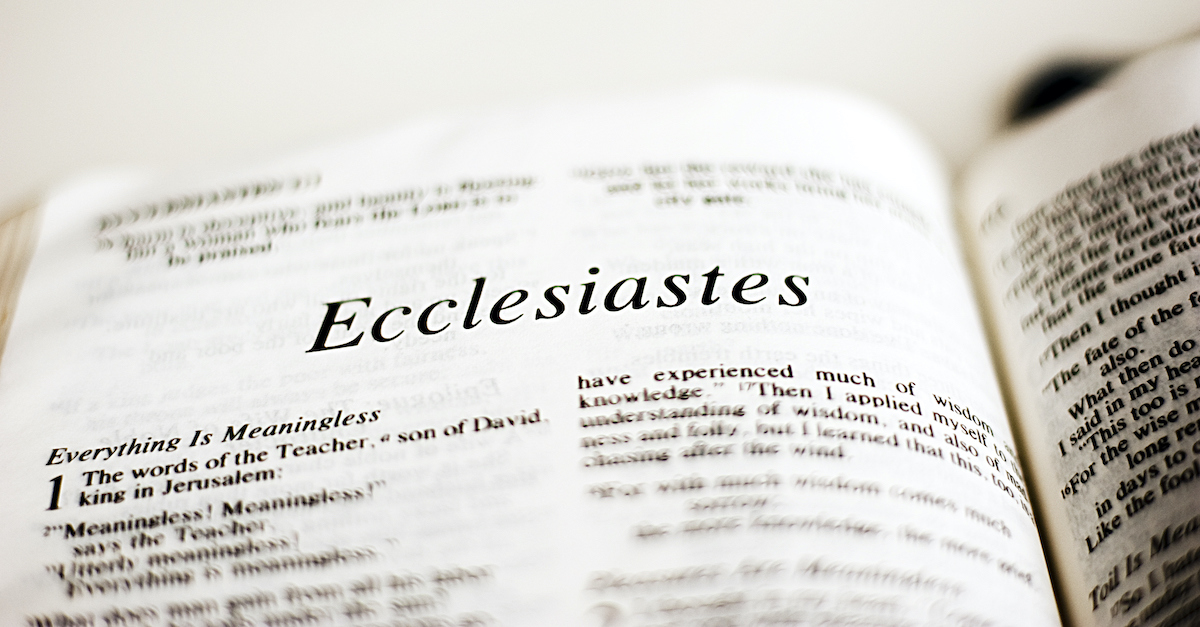
This short twelve-verse chapter continues Solomon's meditation from Ecclesiastes 5 on wealth, describing the tragedy of a man given riches, wealth, and honor whom God does not allow to enjoy them. Read the full chapter below.
Here was an evil, I had seen under the sun,—and it is, common, among men:
A man to whom God giveth riches and gains and honour, so that nothing doth he lack for his soul—of all that he craveth, and yet God doth not give him power to eat thereof, but, a man unknown, eateth it,—this, was vanity, and, an incurable evil, it was.
Though a man should beget a hundred children, and live, many years, so that many should be the days of his years but, his own soul, should not be satisfied with the good, and he should not even have, a burial, I said, Better than he, is an untimely birth!
For, in vain, it came in, and, in darkness, it departeth,—and, with darkness, its name, is covered:
even the sun, it never saw, nor aught did it know,—more quietness, hath this than the other.
Even though one hath lived a thousand years twice told, yet, good, hath he not seen,—is it not, unto one place, that, all, are going?
All the toil of man, is for his mouth,—though, even the desire, is not satisfied!
For what profit hath the wise man, over the dullard? What can, the poor man, know—so as to walk before the living?
Better what the eyes behold, than the wandering of desire,—even this, was vanity, and a feeding on wind.
Whatsoever one may be, long ago, was he called by his name, and it is known that it is—Son of Earth,—he cannot, therefore, contend with one stronger than he.
Seeing there are things in abundance which make vanity abound, what profit hath man?
For who knoweth what is good for a man throughout his life, for the number of the days of his life of vanity, seeing he will make them, like a shadow,—for who can tell a man, what shall be after him, under the sun?